

It is impossible
December 17, 2011
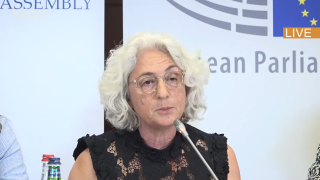
The European parliament has adopted a resolution calling on the Russian government to cancel the results of the parliamentary elections on December 4 and hold new free elections. In the same resolution the European MPs are calling on Russia to register all opposition parties before the next elections and investigate all electoral violations on December 4. The European parliament has asked the EU leadership to raise these issues during the EU-Russia two-day summit. Of course there is no possibility that Russia may invalidate the results of elections, and following the mentioned announcement the Russian foreign minister announced that those issues would not be discussed during the meetings as those were not included in the agenda. According to the Russian government, this resolution is not correct and it is an attempt to interfere with the internal affairs of another country. However, this announcement concerning violated elections concerns positive messages too. Maybe it is not so much targeted at Russia but other... [full story]

Calculations about the return of Putin
October 8, 2011
Thomas de Waal, a senior associate at the Carnegie Endowment for International Peace wrote an article in the National Interest magazine about the expected development in the Russian Federation. In his “Vladimir Putin and South Caucasus” de Waal writes that Russia’s neighbors are asking what the heralded return of Vladimir Putin to the Kremlin means for their own regions. “One such region is the South Caucasus. Caucasian leaders’ calculations will certainly change in the wake of the Putin move. In Armenia, news of his return will have gladdened Robert Kocharyan, another ex-president who has been lurking in the shadows. There are obvious parallels between the two: both men gave up the position of president in 2008 after serving two terms and handed over power to a trusted successor. Kocharyan is, like Putin, a man of action with a tough, uncompromising personality. And he may see the return of his former ally as a chance to re-launch his own public career. There are important differences,...
Russians are worried
May 3, 2011
The Russian Nezavisimaya Gazeta has published information concerning the recent visit of The US Deputy Assistant Secretary of State for European and Eurasian Affairs Tina Keidenau to South Caucasus. After visiting Georgia and Azerbaijan she also visited Armenia. Nezavisimaya Gazeta writes that in the three countries of South Caucasus Tina Keidenau was planning to meet with representatives of the governments, influential opposition leaders and non-governmental organizations, as a result of which the American diplomat was planning to get familiar with democratic processes in South Caucasus. This served a reason for experts to compare the situations in South Caucasus, Middle East and North Africa, where the political situations are tense. There are rumors that there may be serious changes in the inner political environments of the three countries of South Caucasus. According to Nezavisimaya Gazeta, if generally demonstrations have become a normal thing in Armenia and Georgia, it is not the same in Azerbaijan, where...
Mediator for South Caucasus
Yuri SIMONYAN | April 30, 2011
A new mediator will appear in the complex region where relations between subjects are complicated, tangled or there are no relations at all. She will undertake unraveling this knot of contradictions, eliminating mutual hatred, inseminating amity and love. And everything will be settled gradually. The mediator will start operating from next week. First she will arrive in Georgia, then Azerbaijan, and then Armenia. The advisor of the mediator announced: “The visit will be devoted to the establishment of a dialogue between Caucasian republics”. The advisor also said that the role of the mediator is to put the dialogue into process. He also mentioned that the contact of the political leaders and people of those countries was needed, so that they could sit down and speak. The mediator’s advisor promised that the mediator would encourage the countries which had unsolved conflicts to make just a small step in order to achieve a dialogue and mutual understanding. Then the advisor focused on Georgia a...
Yevgeni Primakov: “The Arabian revolutions are stimulated by social reasons only”
Yuri SIMONYAN | March 5, 2011
The former Russian prime-minister, member of the Russian scientific presidency, and a Russian leading scientist of Eastern countries Yevgeni Primakov held a press-conference on Monday, which among other issues addressed also the issue of new waves of revolutions in many countries in the world. Meanwhile he emphasized that he did not represent the opinions of the Russian government, their political party, neither the scientific organization nor the society, and said that he was expressing his opinions as an individual. Below are some of the questions and answers asked and given during the mentioned press-conference. - Mr. Primakov, what is happening in the Northern Africa and Middle East? Is this an interconnected process organized by external powers? - I think the processes you are speaking about are stimulated by social and economic reasons. The disorders that took place in a number of Arabic countries have not been stimulated or organized by external powers. These were local processes. For example, the processes...
Sanobar Shermatova, “The main motive of suicide killers is revenge’
Yuri SIMONYAN | January 29, 2011
In Moscow another act of terrorism took place. In Domodedovo airport a suicide bomber exploded himself and the people in the arrival zone. The funerals of the victims will be organized free of charge in Moscow and in the vicinity of Moscow by the Russian government. Their families will also receive 2 million rubles, the badly wounded ones – 1.5 million rubles and the mildly wounded ones – 1 million rubles. Indeed, all this didn’t take place without political speculations. They have already mentioned about the Caucasian trace. As the experience shows during the upcoming weeks in Moscow the traffic will become intense. Especially the non-Slavonic entities will feel most uncomfortable. In all the densely populated areas, objects and routes are taken into control. The Russian capital has already gone through all that before but it’s impossible to police-control each square meter of Moscow. We have tried to disperse these pessimistic moods by trying to speak to an expert of Central Asia and...

Archive
|
The strongest will not let it happen
November 26, 2011
“Armenia and Azerbaijan have concentrated 80% of their armed forces at the borders. To be honest, Armenia’s potential in terms of developing their army potential is limited, and it mainly relies on Russia and is armed with Russian weapons,” said Vladimir Ivanov, military expert and academician on security and protection of public order, in an interview with our correspondent from Moscow. “However, I don’t think there is much possibility of armed conflict in Nagorno Karabakh because the US has good relations with Armenia and is doing its best to resolve the conflict. But the problem is not being solved anyway, even though there are certain commitments about peace and ceasefire. Turkey’s role is important in this issue because it supports Azerbaijan. However, as much as I understand there will not be an armed conflict here because together with Turkey, the US and Russia other powers in the world are doing their best to keep peace in this region.”...
Automatically publicized
December 7, 2010
Yesterday through the Guardian numerous questions were addressed to the founders of Wikileaks Julian Assange. One of the readers asked what would happen to his initiative if he is taken out from the “game” (physically or technically). Is there a second group of activists, who’d be able to continue what’s been started or by his annihilation the game will cease? To these questions Assange answered, “the diplomatic letters are coded and are currently in possession of over 100.000 people. If something happens to me the materials will be automatically publicized. Moreover, the archives are in possession of various news agencies. The history will win. The world will move to a better place. Will we survive? It depends on you.”...
“Deal is done”
September 16, 2010
“The issue of resignation of the mayor of Moscow Yuri Luzhkov may be solved by the end of this week,” this information was provided by a source of Vedomost paper close to the presidential administration of the Russian President. In his word, the campaign against Luzhkov has started at the time when in Kremlin they started to think about finding someone to replace the incumbent mayor. Let us remember that during the past several days the Russian NTV, first channel, Rossia-1 and Rossia-24 TV channels have showed materials, which expose the activities of Luzhkov and other officials of Moscow. And the information campaign against him was finalized with the showing the “Deal is done” scandalous film showed on NTV....
Clinton on the threshold of death?
August 21, 2010
The former US President Bill Clinton has a worry that with his weak health he cannot live till spring. The former head of the White House is continually losing weight and has evidently grown older. The Russian Vzglyad newspaper informs about this. “Bill is trying to maintain his optimism and is hopeful that he will live long enough to see his grandchildren,” confessed a source close the Clintons by confessing that his friends and he only forecast a 6-month life for Bill. The members of the family think that Bill only has several days left and his heart may stop any moment. Let us recall that Bill Clinton, 63 had a heart stroke in 2004....
Gas pipeline for sale
July 10, 2010
The parliament of Georgia has approved the draft on selling the gas pipeline transporting gas to Armenia through the territory of Georgia. During the voting session 88 MPs were for and 5 were against. The Georgian opposition believes this pipeline should be the property of the Georgian companies as among the buyers there may be Russian companies which “can be economic and energetic threat for Georgia.”...
|